As climate action, urban growth, and digital technologies change the way buildings are designed and operated, HVACR and MEP systems are becoming more important than ever.
According to Jaganraj Rathinam, Founder & Principal Consultant of Psychrometric Design Solution, they now play a key role in comfort, energy efficiency, indoor air quality, and sustainability.
How can HVACR and MEP systems evolve in 2026 to deliver low-carbon impact and healthier indoor environments?
The HVACR and MEP industry is entering a defining phase in 2026, driven by global climate commitments, rapid urbanisation, digital transformation, and heightened awareness of indoor environmental quality. The industry is no longer limited to providing thermal comfort; it is now central to energy efficiency, occupant well-being, and climate resilience.
In India and globally, 2026 will mark a strong shift from conventional system-centric designs to performance-driven, data-enabled, and lifecycle-optimised HVAC and MEP solutions. Regulatory pressure, ESG reporting, and green building mandates are accelerating the adoption of low-carbon technologies, while clients demand measurable outcomes rather than theoretical efficiencies.
How can integrated HVACR innovations be combined to deliver higher efficiency and long-term sustainability?
Several key innovations are redefining the HVACR landscape. Low-GWP and natural refrigerants such as CO₂, ammonia, and HFO blends are moving into the mainstream, supported by safer system designs and more robust industry standards. At the same time, high-efficiency variable-speed technologies—including inverter-driven chillers, VRV/VRF systems, and EC fan solutions—are significantly lowering energy use under part-load conditions, where systems operate most of the time. Hybrid cooling strategies are also gaining traction, with combinations of evaporative cooling (DEC/IDEC), radiant systems, and displacement ventilation enabling designs that respond more intelligently to local climate conditions. In parallel, the adoption of prefabricated and modular HVAC solutions is streamlining construction by minimising on-site errors, enhancing quality control, and reducing overall project timelines.
These innovations are not isolated technologies but part of an integrated ecosystem that prioritises efficiency, adaptability, and sustainability.
How can monitoring and smart HVAC systems improve how buildings consume energy?
Smart HVAC systems powered by sensors, analytics, and cloud platforms are transforming how buildings consume energy. Continuous monitoring of temperature, humidity, indoor air quality parameters, CO₂, PM2.5 and PM10, occupancy patterns, and equipment performance enables HVAC systems to respond dynamically to real-time demand. This intelligence supports demand-based ventilation and cooling, reducing unnecessary over-conditioning, while predictive maintenance strategies help minimise downtime and extend equipment life. Additionally, energy benchmarking and fault detection ensure systems operate at peak efficiency throughout their lifecycle. When these capabilities are integrated with Building Management Systems and energy dashboards, smart HVAC solutions become a key enabler in reducing operational carbon emissions and supporting net-zero objectives.
In what ways can MEP strategies help to achieve carbon-neutral HVAC systems?
Achieving carbon-neutral HVAC systems, however, goes well beyond improving equipment efficiency alone. It requires a holistic MEP approach that begins with passive design optimisation, including building orientation, high-performance envelopes, effective shading, and maximised daylighting to reduce base loads. Accurate load calculations and diversity analysis are essential to right-size systems and avoid embedded inefficiencies. Electrification of HVAC systems, supported by renewable energy sources such as rooftop solar and green power procurement, plays a central role in decarbonisation, while optimisation of the water–energy nexus—particularly in cooling towers and condenser systems—helps address indirect energy impacts. Crucially, early-stage collaboration among architects, MEP consultants, and sustainability specialists ensures that carbon-reduction strategies are embedded in the design process from the outset, rather than treated as late-stage add-ons.
How is AI shaping up as a game-changer in MEP management?
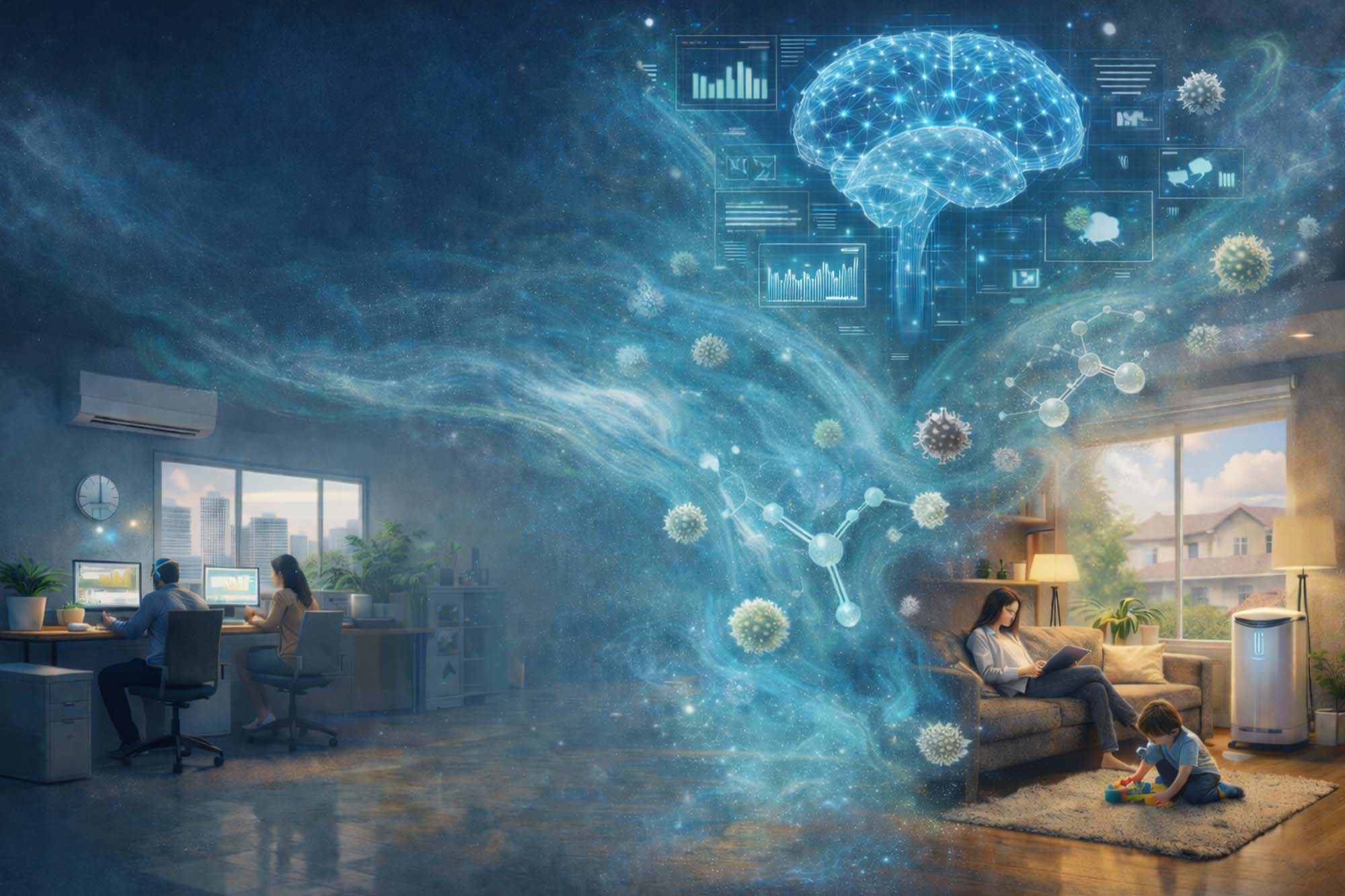
Artificial intelligence is increasingly reshaping MEP management by enabling deeper insights and more proactive control of building systems. By analysing large volumes of data from HVAC installations, AI platforms can forecast energy consumption trends, detect inefficiencies and system faults, and continuously refine control sequences. This intelligence also supports the development of digital twins, allowing scenario analysis, performance optimisation, and effective retro-commissioning throughout the building lifecycle.
In large commercial buildings, data centres, hospitals, and campuses, AI-based optimisation can deliver 10–25% energy savings without major capital expenditure. As AI tools mature, they will become integral to both new construction and retrofit projects.
Which HVACR and MEP innovations are shaping greener buildings?
Some of the most impactful HVACR and MEP innovations shaping green buildings include
Digital Twin technology for performance simulation and continuous optimisation; advanced filtration and IAQ solutions addressing post-pandemic health concerns; heat recovery and energy reuse systems and BIM-integrated MEP workflows, enabling clash-free design, accurate quantity take-offs, and lifecycle asset management.
Together, these innovations enable buildings to transition from static assets to intelligent, responsive systems that adapt to occupants and environmental conditions.
What skills will define the future MEP and HVAC professionals?
The future HVACR and MEP professional must blend strong engineering fundamentals with digital capability and sustainability leadership.
Key skills required today include a strong foundation in thermodynamics, psychrometrics, and HVAC system design, with proficiency in BIM, digital twins, and data-driven engineering. Knowledge of energy modelling, green building practices, and ESG frameworks is equally important, as is the ability to collaborate across disciplines, communicate value clearly, and commit to continuous learning as technologies evolve rapidly.
To bridge the gap between academia and industry, ISHRAE plays a significant role through structured learning pathways such as the Certified Engineering Professional (CEP) for credential-based professional recognition, the ISHRAE Certified Professional (ICP) program offering workshops with theoretical and practical exposure followed by assessment, the Advanced Engineering Diploma (AEDC) focused on in-depth technical and application-oriented upskilling, and ISHRAE IEC workshops that promote hands-on industry–institute engagement.
In addition, organisations such as BEE, FSAI, LEED, IGBC, GRIHA, GEM, and EDGE offer certification examinations that allow professionals to validate their expertise and gain global recognition. Collectively, these initiatives help engineers remain relevant, build credibility, and be recognised as future-ready HVACR and MEP professionals.
How can HVACR and MEP professionals shape net-zero, resilient buildings for the future?
Looking ahead, the convergence of policy, technology, and professional capability will define the next decade of HVACR and MEP development. Net-zero energy buildings, district cooling, AI-driven operations, and climate-adaptive infrastructure will redefine how we design and operate built environments.
The HVACR and MEP fraternity—supported by institutions such as ISHRAE, ASHRAE, FSAI, FOCUS, IPA, and NFE—plays a critical role not only in reducing emissions but also in creating healthier, more resilient, and future-ready buildings. By embracing innovation responsibly and engaging in continuous learning, we can truly contribute to building a better world.
https://www.thermalcontrolmagazine.com/mep/next-phase-of-hvacr-mep-for-greener-buildings-2/